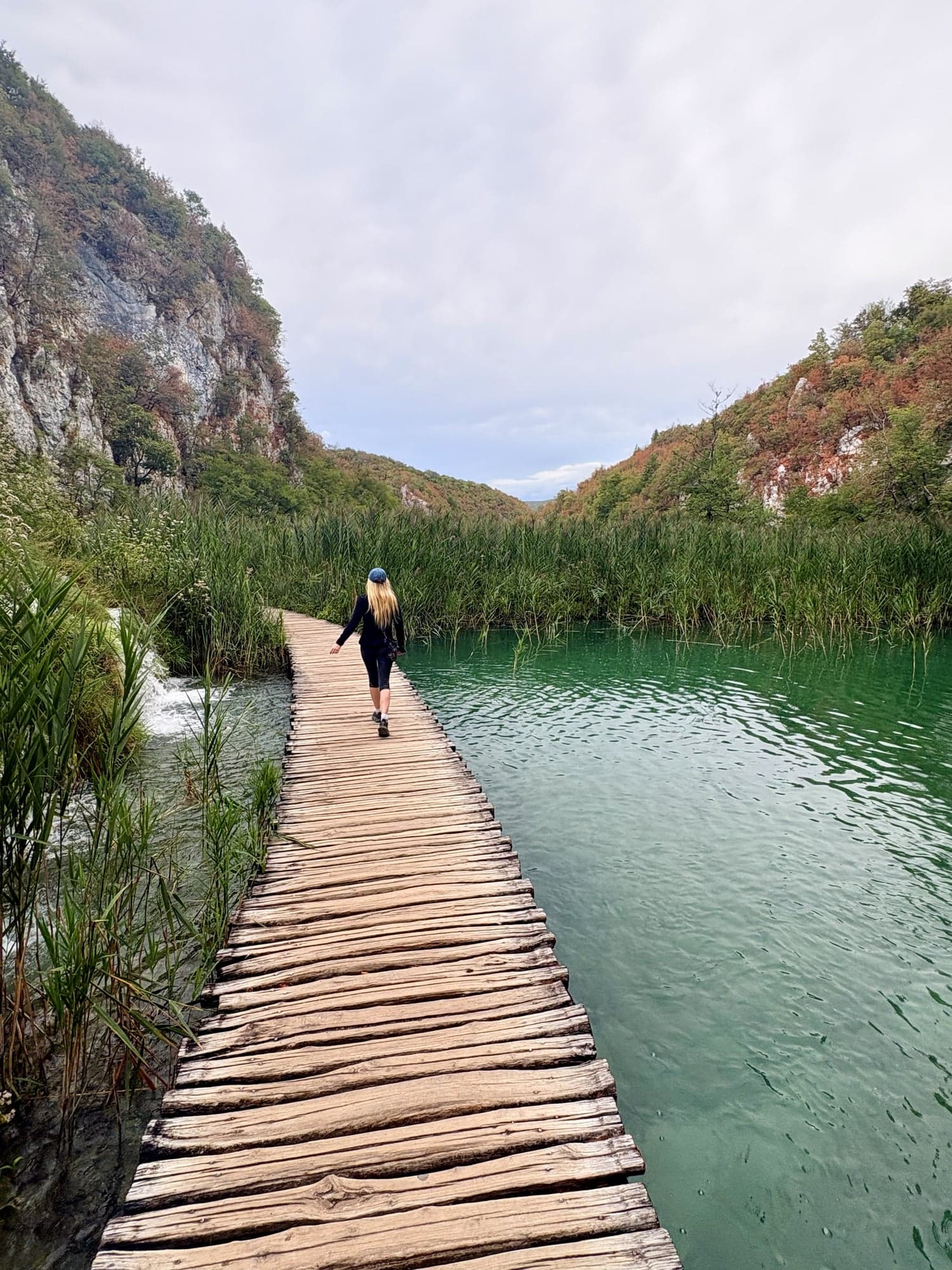
Lessons for your next trip
What’s Worth Your Time and Money When You Travel?
Updated
What I’d plan carefully, what I’d pay more for, and where I’d leave room for a surprise.

After more than 40 countries, I still managed to book our accommodation near one entrance to Plitvice Lakes and tickets for the other. I also went to Ibiza expecting the clubs to be the highlight, despite not really liking EDM. Experience has not made me immune to an avoidable mistake.
It has made me more particular about what I want from a trip. Some experiences are worth saving for; others are worth finding a simpler way to do sooner. These are the choices I’d think through before booking: what you actually want to see, what deserves the extra money, and which details need a plan so the rest of the trip has room to happen.
The view might matter more than the hotel bed
In Iceland and Dubrovnik, I saw people who had made it all that way but were struggling with the walking and stairs. It was hard to watch. It made me think about how often we tell ourselves we’ll do the big trips when we retire, when there’s more time and money.
What that plan leaves out is the climb. You can have the money later and still not be able to do the part you came for. If the hike, the view or walking through the old city is the reason you want to go, don’t automatically put that trip at the bottom of the list.
For me, I would rather see the view on a budget—even if that meant sleeping in a van instead of a lovely hotel bed—than wait for a version of the trip I might never get to do. A perfect room isn’t much of a trade if waiting for it means missing the experience altogether.
That’s a choice about what matters to you, within the money and physical ability you have now. If a comfortable hotel or extra support is what makes a trip work for you, include it. But if the thing holding you back is that every night has to feel as comfortable as home, ask whether that’s really what you’re going away for.
I’m not suggesting you spend money you don’t have. I’m saying it’s worth pricing the simpler version of a trip you keep postponing. A shorter stay, a basic room or fewer stops might get you to the part you actually care about.
A must-do still has to be something you want to do
I went to Ibiza expecting the clubs to be the highlight. The beaches were what made me want to go back. The clubs were huge and impressive, but I like songs I can sing with my friends, and I don’t really like EDM. That probably should have featured more prominently in my planning.
Before paying for a famous experience, ask what you’re actually excited about. For a night out, listen to the artists on the lineup. For a restaurant, look at the food you would order. For a viewpoint, think about whether you want the walk as well as the photograph. You can appreciate why something is impressive without wanting to spend your afternoon or your money on it.
My favorite question is: would I still want to do this if nobody could see that I went? Sometimes the answer is absolutely. Sometimes it gets a very expensive item off the itinerary.
If you love electronic music, my Ibiza disappointment might be your perfect night. The useful part of someone’s recommendation is understanding their taste well enough to know whether you share it.
Build in a stupid-expense buffer
You can account for the flights, hotel, train tickets and dinners and still get caught by all the little things between them. Airport food. A transfer that costs more than you expected. A luggage fee. The taxi that becomes much more appealing after a very long day.
I call this the stupid-expense buffer. I usually allow another 15–20% on top of the planned budget. That’s my starting point, not a promise it will cover every disruption. Leave some money unassigned instead of giving every last bit of it a job before you leave. Then a small surprise doesn’t immediately mean giving up something you were really looking forward to.
Price the whole plan, too. A cheaper hotel can stop being cheaper once you add the journeys to everything you want to do. A manageable club ticket can turn into a much bigger night once you include drinks and getting home. Compare the total you’ll actually pay, and leave room for the parts you can’t predict.
Spend more when it changes the experience
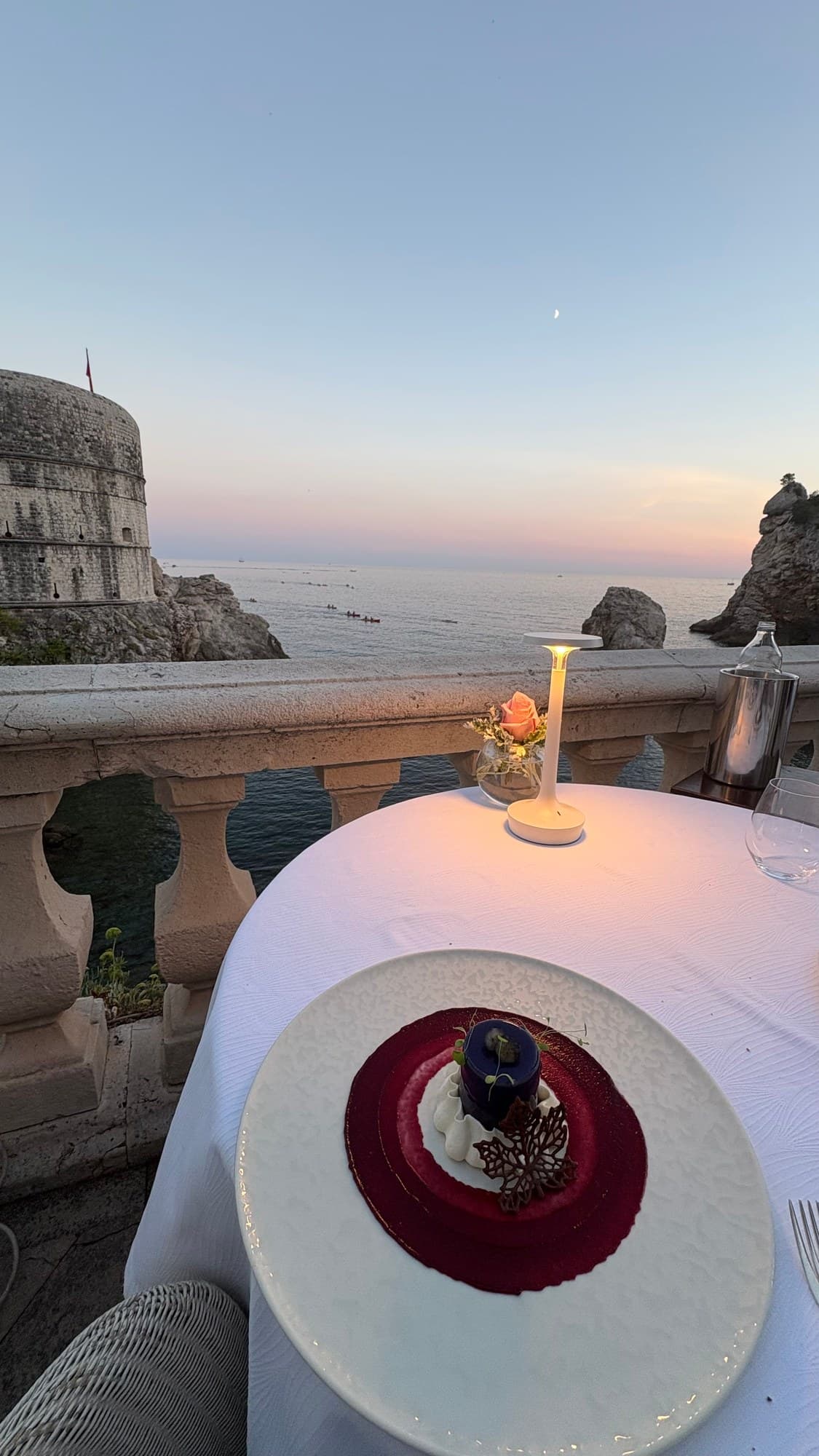
I am very happy to spend more on something I’ll love. Nautika in Dubrovnik is exactly what I mean. The service was phenomenal, the food was wonderful, and the blueberry dessert became the best dessert I’ve ever had. I don’t even like blueberry. The shell cracked into the filling so perfectly; you could tell how much care had gone into it.
That was a dinner worth making an evening of. When you’re choosing a splurge, ask what the extra money buys you that you’ll actually use: a location that makes each day easier, a flight that gives you more time at your destination, or a view you’ll sit and enjoy. An expensive label alone doesn’t answer that.
And book the important part deliberately. I emailed Nautika the day before and was offered a table toward the back. Then another email came through: a cancellation meant we could have a front-row terrace table. We got lucky. If that view is part of why you’re going, ask for it well ahead of time rather than building your evening around having the same luck.
Check the entrance, not just the destination
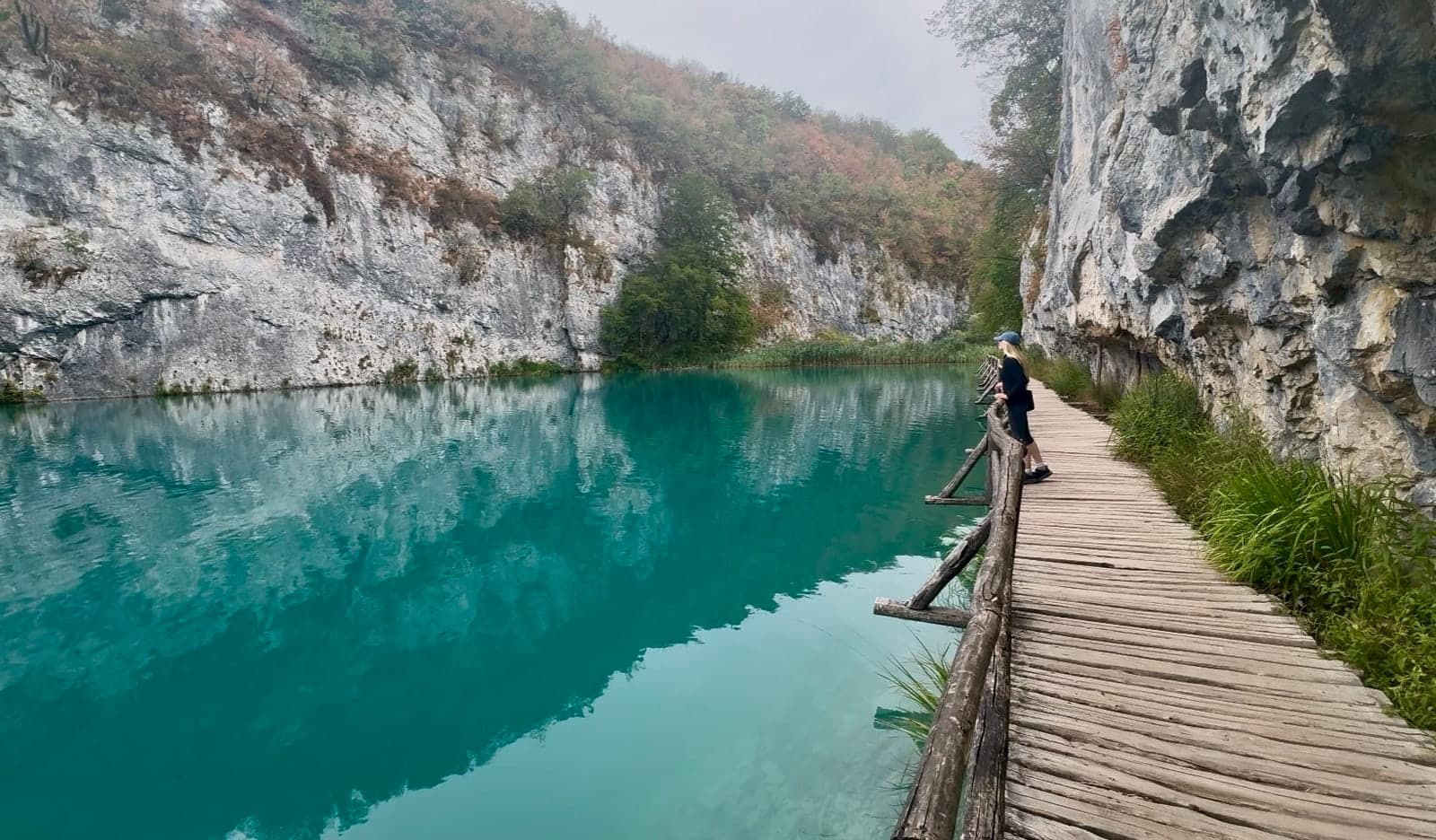
At Plitvice Lakes, I booked our accommodation near one entrance and our tickets for the other. My idea of staying practically next door became a roughly 15-minute drive. Not a catastrophe. Definitely something I could have worked out before booking.
Now, this is the detail I’d check before getting excited about a place described as ‘near’ something: near which entrance, station or part of town? Look up the actual journey you’ll be making, including how you get back. A map pin close to a national park doesn’t tell you how close it is to the start of your route.
Choose the experience first, find its starting point, and then choose accommodation around that plan. It’s a small bit of research that can make the whole day easier.
Book the important things. Leave the rest some breathing room.
I’m Type A. I like knowing where we’re going, how we’re getting there and that the tickets exist. But having a plan and filling every minute are two different things.
At Klis Fortress, we thought we’d spend about 45 minutes having a look around. Two hours later, we were still there. A schedule that required us to leave on the dot would have cut short a place we were enjoying far more than we expected.
Book the things you’d be upset to miss, especially when they need a reservation or timed entry. Know the transport that the day depends on. Then leave gaps around those commitments. You might want a longer lunch, another walk or an afternoon doing very little. You shouldn’t need to cancel three reservations to change your mind.
Make the travel day easier on yourself
Work backward from the flight, with a sensible buffer
I don’t want to spend approximately 47 hours at the airport. I also don’t want to miss the flight trying to prove how efficiently I can get through it.
Check your airline’s recommended arrival time, the check-in and bag-drop deadlines, and when boarding closes. Those are different things. Then allow for getting to the right terminal, queues and any help you need. A check-in cutoff is the latest they’ll accept you, not a target arrival time. American Airlines’ guidance shows the distinction; use your own airline’s requirements for your flight.
Give your phone a backup plan
A phone is your map, boarding pass, reservation and ride home. That is a lot to put on one battery. Bring a charged portable charger and the cable that actually fits. Save the address and important booking details somewhere you can reach without a mobile connection, too.
I use Anker chargers a lot. This isn’t sponsored, and these aren’t affiliate links; I just like having enough battery to get home. Before packing one, check its model against Anker’s recall notices, since some models have been recalled.
Keep a power bank in your cabin bag, and take it out if that bag is checked at the gate. Check your airline’s current capacity, quantity and onboard-use rules before flying. The FAA’s battery-packing guidance is a useful starting point; carrier rules can be stricter.
Pack for the trip you’re actually taking
Comfortable shoes, clothes you’ll wear, essential medication, documents and chargers do more for a trip than six pairs of shoes you have to move between hotels. Lay out the bag, then ask which items are coming because you need them and which are coming because an imaginary version of you might.
Leave out what you can comfortably do without. Keep what makes the trip work for you. Traveling light should make your days easier, not become another competition.
Airline and battery guidance checked on . Use the current rules for your airline and journey.
Leave room to be curious
Inside Grjótagjá in Iceland, we found a beautiful part of the cave behind the rocks on the right, where the water continued farther back. The other visitors we saw were stopping at the entrance. Having that view to ourselves was the best part of finding it.
That is the kind of discovery I want time for. Sometimes the interesting part of a place only appears when you stop trying to get through the visit and move on to the next thing.
For us, the entrance we used was open to visitors; this wasn’t about going around a closure. Stay within the access that’s permitted when you visit. Adventure doesn’t need a broken rule, and booking a guide or a comfortable transfer doesn’t make it less real. Choose the help that gets you to the experience you actually want.
You don’t have to prove anything by traveling alone
Solo travel can be wonderful. It can also be lonely. I like knowing I can do it, and I also really like having someone there to laugh with when something ridiculous happens. You’re allowed to want either version.
If you’re waiting indefinitely for someone else’s calendar to line up, consider a trip you’d feel comfortable taking on your own. Start with the parts you can plan: where you’ll stay, how you’ll get there and back, and who you’ll keep in touch with. Research the specific place and the activities you want to do.
Unfamiliar doesn’t automatically mean unmanageable. You can build confidence a little at a time without making the most difficult option your first attempt. You also don’t owe anyone a solo trip if traveling with someone is what makes you happiest.
When something goes wrong, solve the next problem
A canceled train or a booking problem can make it feel as though the entire trip has collapsed. Try narrowing the question: where are you sleeping tonight, how can you get there, and who can help sort out this one part?
Deal with the immediate need, then work outward. You can contact the operator, look at the next available journey and decide what can move in the itinerary. You don’t have to redesign the whole holiday while you’re standing in a station trying to work out where to go.
This is another reason I like some flexibility and unassigned money in the plan. They give you options when being annoyed about what should have happened isn’t getting you anywhere.
Be kind. You’re a guest.
Ask people about the place they live in, and make the question useful: where would they take a friend for lunch near here, or what would they do with one free afternoon? Their answer gives you another perspective. It doesn’t have to become another compulsory stop.
And remember that the person helping you is having their own day. Say thank you, learn a few words, be patient, and respect the places you’re visiting. Spending money somewhere doesn’t buy permission to be rude. Neither does a plan going wrong.
This is the part I care about most. I want to see as much of the world as I reasonably can, while treating the people and places that make those trips possible with care. Being kind makes that experience better. And even when it doesn’t get you anything in return, it is still the right thing to do.